Skip to content

Company Portfolio

folder_special
folder_special

Company Portfolio

Professional Business Profile

1

What is a Company Portfolio?

A company portfolio serves as a comprehensive collection of information regarding a business's operations, products, and services. It typically encompasses a summary of the organization's history, mission statement, vision, and core values, alongside descriptions of its current and past products and services, target markets, and competitive positioning.
Company Portfolio Overview
zoom_in

Scope and Purpose

Additionally, the portfolio may contain financial data like revenue figures, profit margins, and growth forecasts, as well as details about the organizational structure, leadership team, and any awards or recognitions received. Its primary objective is to offer potential clients, investors, partners, and employees a clear overview of the company's capabilities and offerings. It is frequently utilized in sales and marketing initiatives, investor presentations, and recruitment materials, among other applications.

2

Information to Include

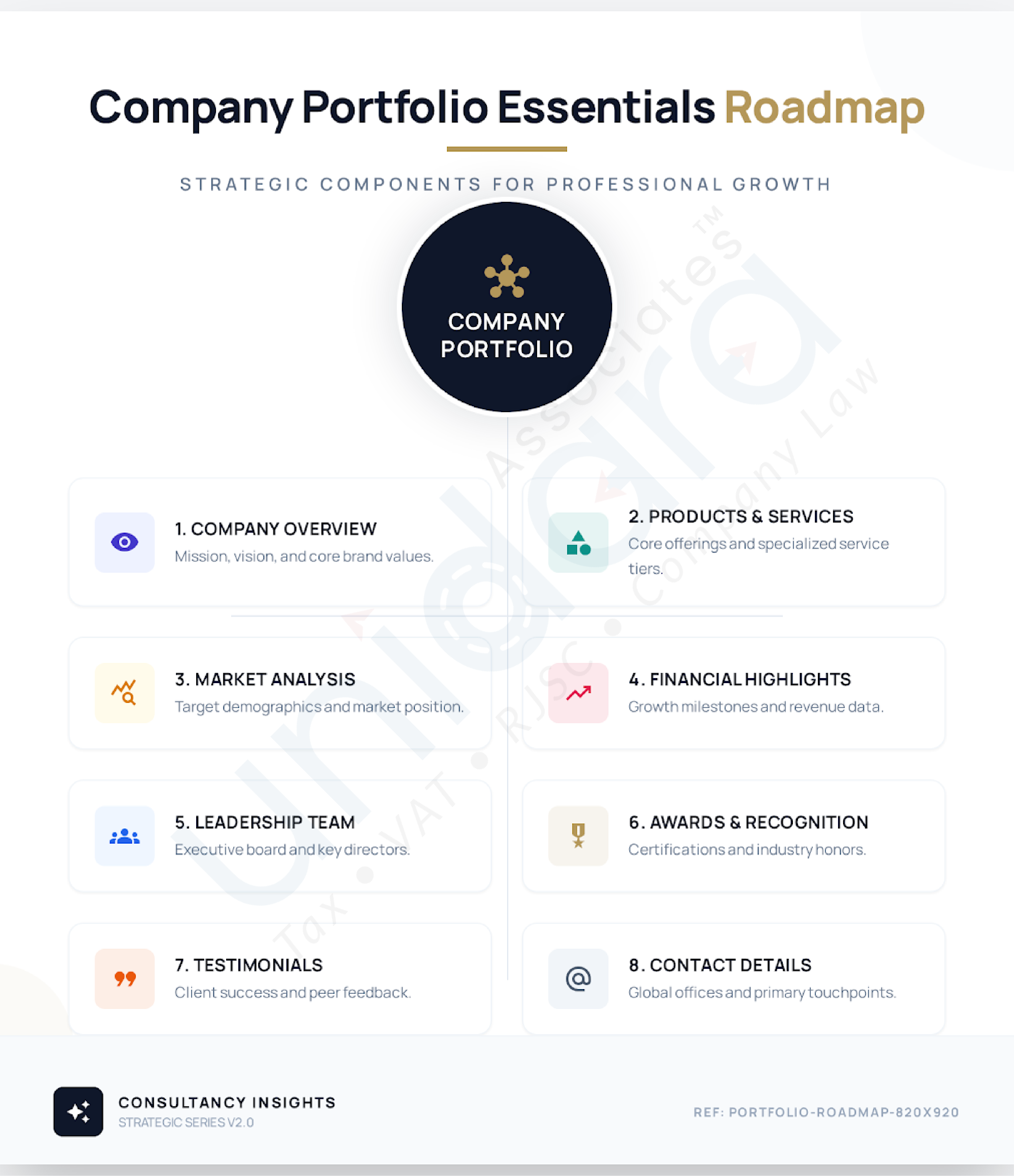
To provide a comprehensive overview of the company and its offerings, a portfolio should include a variety of information. Here is a list of what it may contain: • Company Overview: This section outlines the company's history, mission, vision, and core values. • Products and Services: This details both current and historical offerings, as well as any products currently in development. • Market Analysis: This segment provides an analysis of the competitive landscape and target market, including market trends and key competitors. • Financial Information: This includes financial data such as profits, revenue, and projections for growth. • Leadership Team: This section offers information on the leadership team, including their roles, responsibilities, and biographical details. • Organizational Structure: This provides an overview of the company's structure and how different departments and teams collaborate. • Awards and Recognition: This highlights any accolades or awards the company has received, such as customer accolades or industry awards. • Contact Information: This provides details for contacting the company, such as email address, phone number, and physical location. • Testimonials: This includes case studies and customer testimonials that demonstrate the effectiveness and value of the company. Overall, a company portfolio should present a compelling and clear overview of the company, its competitive market positioning, and its products and services.
3

Importance of the Company Portfolio

The company portfolio is a vital tool for communicating capabilities, offerings, and strengths to potential partners, customers, and investors. Here are key reasons for its importance: • Establishes a Professional Image: A comprehensive and well-crafted portfolio helps build a professional image, ensuring a strong first impression among potential partners and customers. • Provides an Overview of Products and Services: It offers a detailed overview of what the company provides, helping customers determine if the offerings fit their needs. • Demonstrates Competitive Advantage: The portfolio can highlight the company's competitive edge and show how its services and products surpass those of competitors. • Attracts Investors: Investors seek companies with clear business plans; a well-articulated portfolio provides necessary information for informed investment decisions. • Helps in Recruitment: It aids in attracting top talent by providing a clear picture of the company's values, mission, and culture, which are crucial for potential employees. • Acts as a Sales Tool: It serves as a sales tool to showcase strengths and capabilities to potential customers, helping generate revenue and close deals. Overall, it is an essential instrument for any business to effectively communicate its strengths, offerings, and competitive positioning, significantly impacting business success.
4

How to Improve Your Portfolio

Improving your portfolio can enhance communication of your capabilities and strengths to partners, investors, and customers. Here are tips for improvement: • Focus on Your Unique Value Proposition: Clearly define your unique value proposition and distinguish what sets your business apart from competitors to help customers understand the benefits of working with you. • Use High-Quality Visuals: Utilize high-quality graphics and photographs to make the portfolio engaging and visually appealing, drawing in investors and customers. • Provide Clear and Concise Information: Ensure information is presented in a clear, concise manner that is easy to understand. Avoid technical terms or jargon that might confuse potential customers. • Incorporate Customer Testimonials: Including testimonials helps demonstrate the value of your services and products, building credibility with potential customers. • Highlight Achievements and Awards: If your company has received accolades or industry awards, highlight them to build credibility and establish your company as a field leader. • Keep It Up-to-Date: Regularly update the portfolio to reflect new information, achievements, or changes to products and services. • Get Feedback: Finally, seek feedback from investors, customers, and stakeholders to identify improvement areas and weaknesses, allowing you to better meet target audience needs. By following these steps, you can build a professional portfolio that effectively communicates your capabilities, strengths, and competitive positioning, helping to build credibility with investors, partners, and customers.
5

Common Questions

• How do I create a company portfolio? To create a business portfolio, choose a portfolio tool or format, include basic business information, refine the objectives and mission statement, detail services and products, list business relationships and affiliations, and regularly review the portfolio. • What is a company portfolio example? An example of a business portfolio is the collection of services, products, and assets that describe a company (like Coca-Cola) and provides it with opportunities to achieve its objectives. • What is the difference between a company profile and a company portfolio? Fundamentally, there is little difference between a "company profile" and a "company portfolio." Both detail the company's vision, mission, goals, and history. The company profile specifically provides an overview of the company, its services, and products offered.
gavel

Note: A well-structured company portfolio is essential for establishing professional credibility and attracting business opportunities.

Want us to handle this for you?

We follow these procedures every week. Tell us about your business and we’ll give you a fixed quote.

01317-028002info@unidaraassociates.bd

Have a deadline coming up? Let’s get it filed.

Tell us what you need. A licensed practitioner reviews your case and sends a fixed quote before any work starts.